HOUSEHOLD WATER TREATMENT FOR DRINKING
Access to clean water has been a long-term challenge in many developing countries around the world, and many lives have been lost due to a lack of sufficient supply of clean water. It is estimated that 200 children around the world die of waterborne diseases every minute. Although 70% of our planet is covered by water, many families in Africa find it a stressful challenge to access clean water for domestic use.
In order to promote food security in developing countries, there must be enough clean water for household use and farming. Mostly, the water available in rural and slum communities is dirty and contaminated. Finding an affordable and effective household water treatment technology has not been an easy journey, but thanks to the innovative Ceramic Water Filter technology offering safe drinking water for household, school, and hospital use.
The Ceramic Water Filter is made of locally available materials such as red clay, sawdust, water, and colloidal silver. Water is added to the dry mixture of 40% red clay soil and 60% sawdust, then the damp mixture is placed in the hydraulic press mold to produce the filter. The filters are dried for at least 21 days, then they are fired in the potter's kiln at a temperature of 890 degrees Celsius. At this point, the sawdust gets burned off, leaving behind tiny pores that prevent water contaminants from passing through.
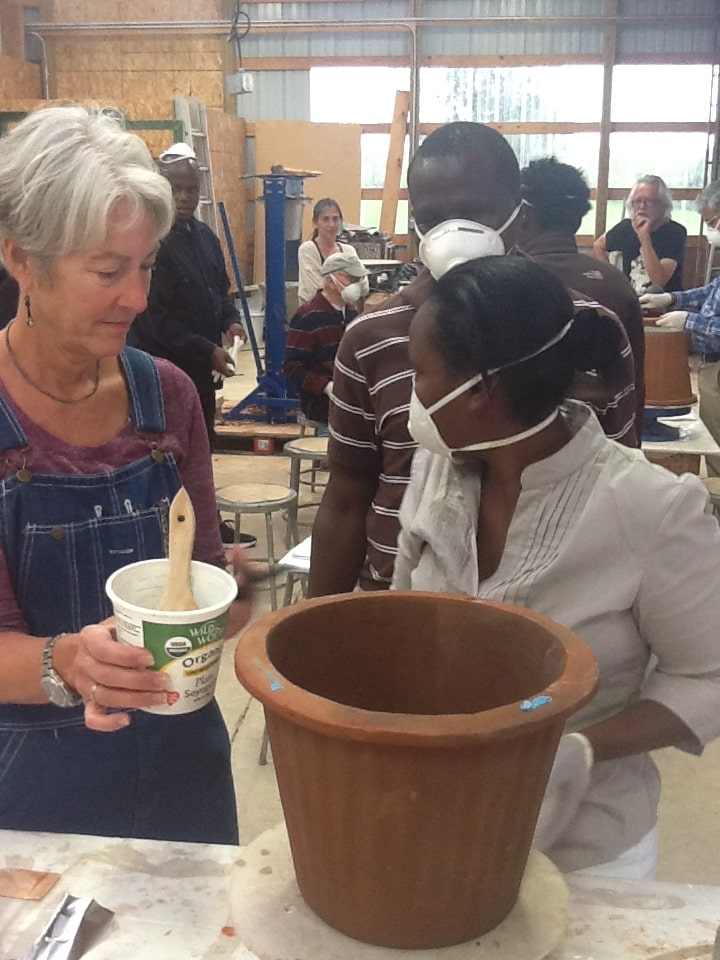
Once the filter meets the standard filtration rate, the filters are treated with colloidal silver, which acts as a disinfectant that traps any germs that might have passed through the pores, making the water obtained 99.98% pure. This makes the Ceramic Water Filter technology the most effective for household water treatment. In collaboration with KIMSSEA, ICECHANGE, and CERAMAJI, we produce high-quality Ceramic Water Filters for schools, hospitals, and household use.